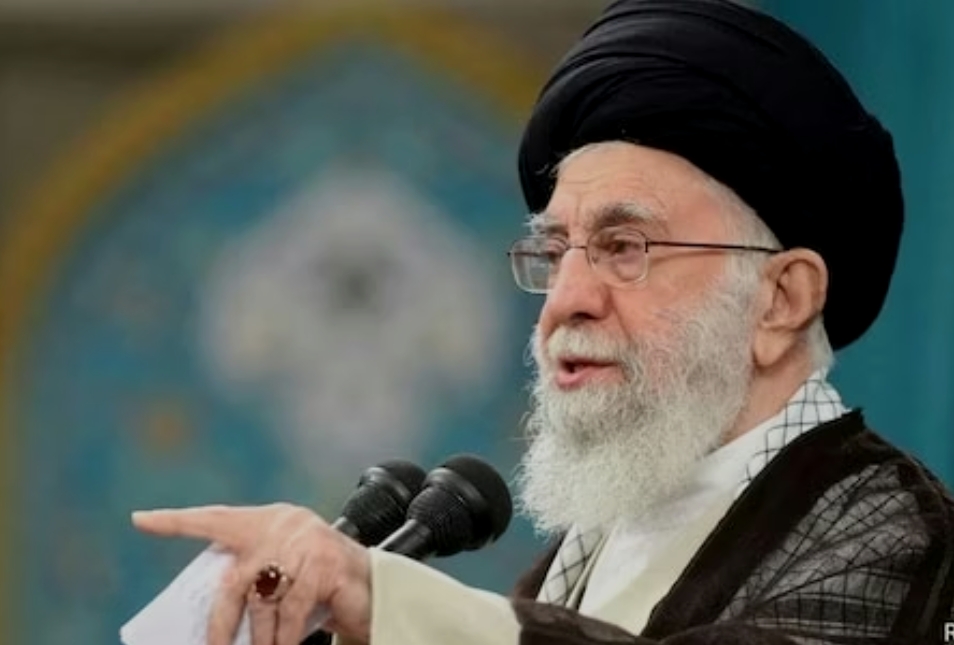
On Sunday morning, Iran’s state broadcaster, IRIB, officially announced that the Supreme Leader had been “martyred.” This confirmation follows a social media post by U.S. President Donald Trump, who was the first to break the news. Taking to Truth Social, Trump wrote, “One of the worst people in history, Khamenei, is dead.”
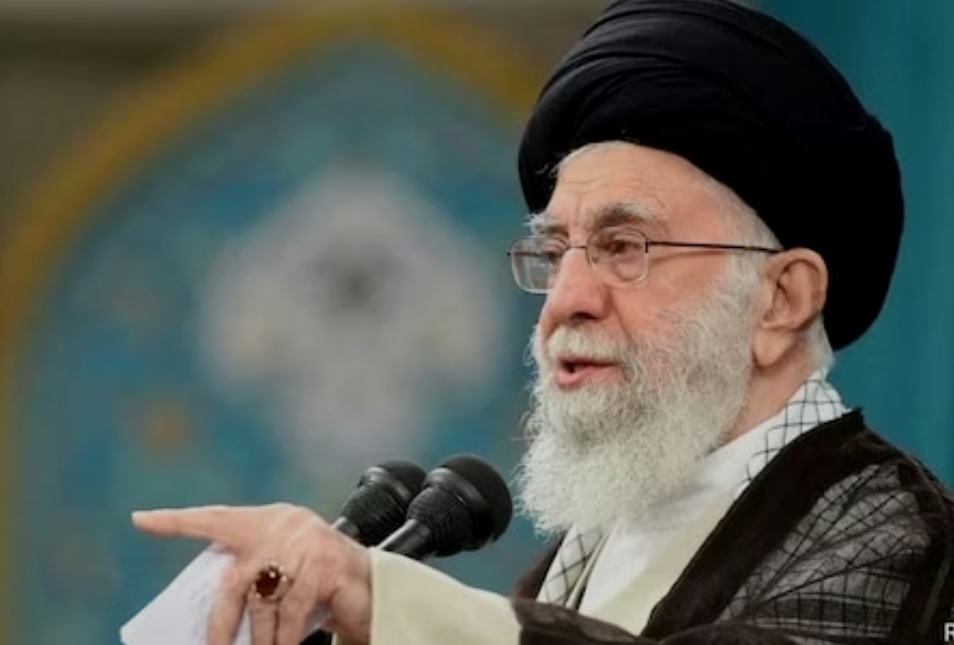
Tehran: In a historic and destabilizing development, Iranian state media has confirmed that Supreme Leader Ayatollah Ali Khamenei has been killed following a coordinated military strike by Israel and the United States.
Major Iranian news outlets, including the Tasnim and Fars news agencies—both closely linked to the Islamic Revolutionary Guard Corps (IRGC)—have also verified the death.
Killed Inside His Tehran Compound
According to reports from the Fars news agency, the strike targeted Khamenei within his heavily fortified compound in Tehran. The agency detailed that the Supreme Leader was killed on Saturday morning while performing his official duties at his office. Satellite imagery released shortly after the strike showed thick plumes of black smoke rising from the site of the compound.
In response to the assassination, the Iranian government has declared 40 days of public mourning and a seven-day national holiday.
Emotional Scenes on National Television
The gravity of the event was captured in a poignant moment on Iranian state television, where the news anchor broke down in tears while reading the official statement regarding Khamenei’s death.
International outlets, including Al Jazeera, have reported that citizens are beginning to pour into the streets of Tehran. Amidst the chaos and grief, a massive explosion was reportedly heard echoing through the capital, adding to the tension and uncertainty of the situation.
The Legacy of Ali Khamenei
Ali Khamenei assumed the mantle of Supreme Leader in 1989 following the death of his predecessor, Ayatollah Ruhollah Khomeini, the founding father of the Islamic Revolution . While Khomeini started the revolution, it was Khamenei who spent decades meticulously building Iran’s modern military and paramilitary infrastructure.
He was the architect of a system designed not only to defend Iranian soil but to exert influence across the Middle East through a sophisticated network of regional proxies. Before becoming Supreme Leader, Khamenei served as Iran’s president during the brutal, decade-long war with Iraq in the 1980s.
His death marks the end of an era for the Islamic Republic and leaves the nation facing an unprecedented power vacuum.